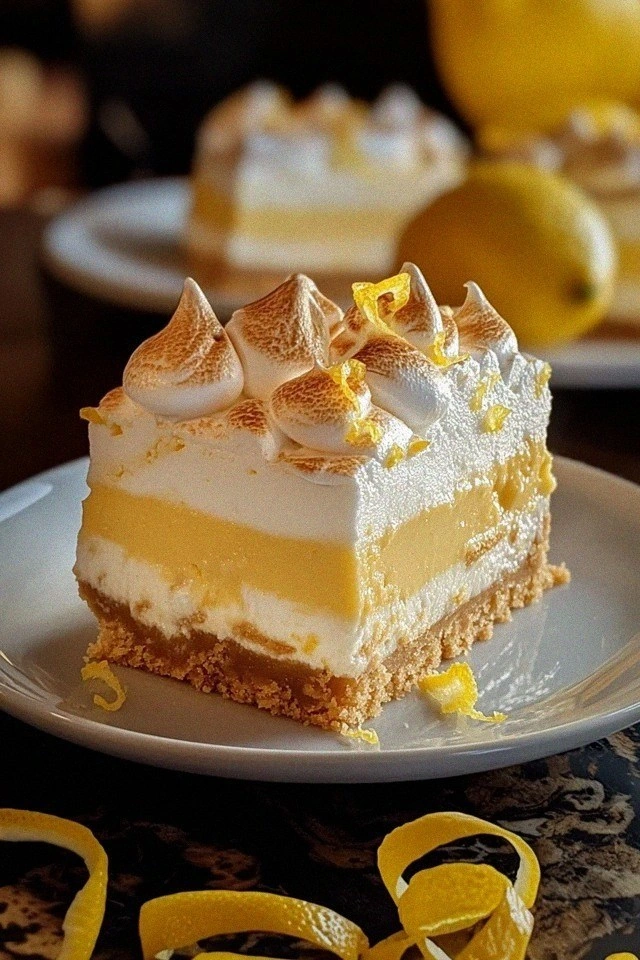
Triple Lemon Meringue Cheesecake
 Save
Save
The first time I tried to bake a lemon meringue cheesecake, I was standing in my kitchen on a bright spring afternoon, the scent of fresh lemons drifting in from the garden as I sliced the fruit. I could hear the distant hum of bees buzzing around the blooming orange blossoms, and the sunlight painted a golden halo on the marble countertop. When I lifted the lid of the oven, a cloud of fragrant steam rose like a soft, citrusy veil, wrapping the whole house in a perfume that made my stomach growl with anticipation. That moment—when the bright, tart aroma met the sweet, airy whisper of meringue—became the spark for what would later evolve into my signature Triple Lemon Meringue Cheesecake.
What makes this dessert stand out isn’t just the three layers of lemony goodness, but the way each component plays a symphony on your palate. The buttery graham cracker crust provides a sturdy, slightly salty foundation that grounds the tangy lemon curd, while the silky cheesecake layer adds richness without overwhelming the citrus. Then, the crowning glory: a lofty meringue that’s toasted to a perfect caramel‑kissed finish, offering a delicate crunch that shatters into melt‑in‑your‑mouth clouds. Imagine the contrast of textures—crunch, cream, and cloud—each bite delivering a surprise that keeps you reaching for more.
But wait, there’s a secret twist hidden in step four that transforms the ordinary lemon curd into a glossy, almost jewel‑like glaze that makes the whole cake shine. I’ll spill the beans later, but trust me, you’ll want to note that little hack before you start mixing. And if you’ve ever wondered why a restaurant’s lemon meringue cheesecake tastes like it was made by a pastry wizard, the answer lies in a few simple tricks that I’ve gathered over years of trial, error, and a few happy accidents.
Here’s exactly how to make it — and trust me, your family will be asking for seconds, your friends will beg for the recipe, and you’ll feel a surge of pride every time you slice into that golden‑brown meringue peak. Ready to dive in? Let’s roll up those sleeves, preheat the oven, and embark on a lemon‑laden adventure that will become the star of every celebration.
🌟 Why This Recipe Works
- Flavor Depth: By layering lemon curd, fresh lemon zest, and a hint of vanilla, the cake delivers a multi‑dimensional citrus punch that stays bright without being sour. Each bite reveals a new nuance, from the sharp zing of zest to the mellow sweetness of curd.
- Texture Harmony: The crunchy crust, creamy cheesecake, and airy meringue create a triptych of textures that keep the palate engaged. No single element dominates, allowing every mouthful to feel balanced and satisfying.
- Ease of Execution: Despite its impressive appearance, the recipe relies on straightforward techniques—no fancy equipment or professional tempering required. Even a home cook can achieve bakery‑level results with a little patience.
- Time Efficiency: While the baking itself is quick, most of the work happens while the cake cools, giving you plenty of time to prep other dishes or simply relax and enjoy the fragrant kitchen aromas.
- Versatility: The base can be swapped for a chocolate cookie crust, the lemon curd can be replaced with lime or orange, and the meringue can be flavored with a splash of liqueur for an adult twist.
- Nutrition Balance: Using Greek yogurt in the filling adds protein, while the meringue remains low‑fat, making the dessert feel indulgent without excessive heaviness.
- Ingredient Quality: Fresh lemons and high‑quality cream cheese elevate the flavor profile, turning simple pantry staples into a gourmet experience.
- Crowd‑Pleaser Factor: The bright, sunny appearance and the familiar comfort of lemon meringue make it a hit at brunches, birthday parties, and even formal dinner parties.
🥗 Ingredients Breakdown
The Foundation: Crust & Base
A solid crust is the unsung hero of any cheesecake, and here we use finely ground graham crackers mixed with melted butter and a pinch of sugar. The butter adds richness while the sugar helps the crumbs caramelize just enough to give a subtle crunch. If you prefer a gluten‑free version, substitute the graham crackers with almond flour or a gluten‑free cookie crumble; the texture will stay just as satisfying. When selecting graham crackers, look for ones with a hint of honey—they’ll lend an extra layer of flavor that complements the lemon beautifully.
Citrus Symphony: Lemon Curds & Zest
The lemon curd is the heart of this dessert, providing that vibrant, tangy punch. Freshly squeezed lemon juice is essential; bottled juice often lacks the bright acidity that makes the curd sing. Adding lemon zest amplifies the aromatic oils, giving the curd a fragrant lift that you can almost taste before the first bite. For a richer curd, incorporate a tablespoon of unsalted butter at the end of cooking—this creates a glossy finish and a silky mouthfeel. If you’re out of lemons, a mix of lime and orange juice can create a tropical twist while preserving the acidity.
The Secret Weapons: Cream Cheese & Yogurt
Cream cheese provides the classic cheesecake richness, but mixing in Greek yogurt lightens the texture and adds a subtle tang that mirrors the lemon curd. This combination prevents the filling from feeling too heavy, especially important when you’re layering three lemon components. Choose full‑fat cream cheese for the best flavor; low‑fat versions can become grainy when baked. When it comes to yogurt, opt for plain, unsweetened varieties to avoid unwanted flavor clashes.
Finishing Flourish: Meringue
A perfect meringue is all about technique. Fresh egg whites whip up into glossy peaks when they’re free of any yolk or grease, and a pinch of cream of tartar stabilizes the foam, allowing it to hold its shape during baking. Adding superfine sugar gradually ensures the meringue stays smooth and glossy, not grainy. For an extra touch of elegance, sprinkle a pinch of lemon zest into the meringue before spreading it over the cheesecake; this adds a faint citrus aroma that ties the whole dessert together.
With your ingredients prepped and ready, let's get cooking. Here’s where the fun really begins, and you’ll discover that one tiny trick that turns an ordinary lemon curd into a glossy masterpiece that dazzles the eye and the palate alike.
🍳 Step-by-Step Instructions
🔐 Expert Tips for Perfect Results
The Taste Test Trick
Before you pour the batter into the crust, dip a small spoon into the mixture and taste a tiny bit. This is your moment to adjust the balance—if the lemon feels too sharp, add a splash of heavy cream or a teaspoon of honey. Small adjustments at this stage make a huge difference in the final flavor profile, turning a good cake into a perfectly balanced dessert.
Why Resting Time Matters More Than You Think
Even after the cheesecake looks set, the proteins are still contracting. Giving the cake a full night in the fridge lets those proteins relax, preventing cracks and ensuring a smooth surface. I once sliced a cheesecake after only an hour of cooling; the result was a jagged, uneven slice that looked sad on the plate. Patience truly pays off.
The Seasoning Secret Pros Won’t Tell You
A pinch of sea salt sprinkled over the lemon curd before baking amplifies the citrus brightness and cuts any lingering sweetness. It’s a subtle technique used by pastry chefs to create depth without adding extra ingredients. Try it, and you’ll notice the lemon flavor becomes more vibrant, almost like a burst of sunshine.
Meringue Mastery: The Right Temperature
When spreading the meringue, aim for a surface temperature of about 120°F (49°C). If the cheesecake is too hot, the meringue will melt; if it’s too cold, the meringue may not adhere properly, leading to cracks. A quick hand‑warmth test—touching the center of the cheesecake with the back of your hand—helps gauge the ideal moment.
The Best Part? Toasting the Meringue
For a caramelized finish, use the broiler for the last 2 minutes of baking, watching closely to avoid burning. The meringue should turn a light amber, releasing a sweet, toasted aroma that pairs beautifully with the lemon. I once left it a second too long, and the edges turned a deep brown—still delicious, but a little bitter. Keep a close eye, and you’ll achieve that perfect toasted hue.
🌈 Delicious Variations to Try
One of my favorite things about this recipe is how versatile it is. Here are some twists I’ve tried and loved:
Lavender Lemon Dream
Add 1 teaspoon of culinary lavender to the lemon curd and a few dried lavender buds to the meringue. The floral notes complement the citrus, creating a sophisticated flavor that’s perfect for spring brunches.
Berry‑Burst Fusion
Swirl in ½ cup of fresh raspberry puree into the cheesecake batter before baking, and top with a handful of fresh berries after chilling. The tart berries add a beautiful color contrast and a burst of juicy sweetness.
Chocolate‑Lemon Delight
Replace half of the graham cracker crust with a chocolate cookie crumb mixture, and fold 2 ounces of melted white chocolate into the cheesecake batter. The subtle chocolate undertone deepens the flavor without overpowering the lemon.
Coconut‑Infused Sunshine
Stir ¼ cup of shredded coconut into the crust and replace half of the Greek yogurt with coconut yogurt. The tropical hint adds a creamy, nutty dimension that pairs wonderfully with the citrus.
Adult‑Only Zest
Add a tablespoon of Limoncello or a splash of vodka to the lemon curd for a gentle boozy lift. The alcohol evaporates slightly during baking, leaving behind a sophisticated depth that adult guests will appreciate.
Spiced Lemon Surprise
Incorporate a pinch of ground ginger and cardamom into the cheesecake batter for an exotic, warming twist. This variation works especially well during cooler months, offering a comforting yet bright flavor.
📦 Storage & Reheating Tips
Refrigerator Storage
Cover the cheesecake loosely with plastic wrap or store it in an airtight container. It will keep fresh for up to 4 days in the fridge. For the best texture, let the cake sit at room temperature for 15‑20 minutes before serving so the meringue softens slightly and the flavors become more pronounced.
Freezing Instructions
To freeze, wrap the entire springform pan tightly in several layers of foil and then place it in a freezer‑safe bag. The cheesecake freezes well for up to 2 months. When you’re ready to enjoy it, transfer it to the refrigerator and thaw overnight before unwrapping.
Reheating Methods
If you prefer a warm slice, gently reheat individual portions in a microwave for 10‑15 seconds, or place a slice on a baking sheet and warm it in a 300°F (150°C) oven for 5‑7 minutes. The trick to reheating without drying it out? Add a splash of water to the baking sheet and cover loosely with foil, which creates a steamy environment that keeps the meringue soft.
❓ Frequently Asked Questions
Can I make this cheesecake without a springform pan?
Why does my cheesecake crack on the surface?
Can I substitute fresh lemon juice with bottled juice?
How do I achieve a glossy meringue without it turning grainy?
Can I make a dairy‑free version?
Why does my meringue not brown evenly?
Can I add a different fruit topping?
How long can I keep the cheesecake after it’s been sliced?
When the cheesecake is done, remove it from the oven and immediately spread the meringue over the hot surface, using a spatula to create peaks and swirls. The residual heat will gently set the base of the meringue, creating a seal that prevents cracks as the cake cools. Then, return the pan to the oven and bake for an additional 10‑12 minutes, or until the meringue turns a light golden brown and gives off a caramelized fragrance.
Allow the cheesecake to cool completely at room temperature, then chill it in the refrigerator for at least 4 hours, preferably overnight. This cooling period allows the layers to set firmly and the flavors to meld, resulting in clean, sliceable pieces. When you finally cut into it, you’ll hear a gentle sigh as the meringue gives way, releasing a burst of citrus perfume.
Before serving, garnish with thin lemon slices, a dusting of powdered sugar, and a few fresh mint leaves for color contrast. The final presentation should look like a sun‑kissed masterpiece, with the golden meringue peaks gleaming like tiny suns. And there you have it! But before you dig in, let me share some tips that will take this from great to absolutely unforgettable…
Similar Recipes
 Desserts
Fruity Chill Pops: The Ultimate Guide to Homemade Refreshment
Delicious Fruity Chill Pops: The Ultimate Guide to Homemade Refreshment
 Desserts
Frozen Yogurt Matcha Green Tea Squares: A Refreshing Treat
Delicious Frozen Yogurt Matcha Green Tea Squares: A Refreshing Treat
 Desserts
Chocolate Fondue Valentine’s Day: 5 Sweet Moments to Cherish
Learn how to make delicious Chocolate Fondue Valentine’s Day: 5 Sweet Moments to Cherish. Easy recipe…
 Desserts
Pumpkin Streusel Pound Cake
Discover the perfect fall treat with our Pumpkin Streusel Pound Cake—a moist, buttery cake topped with…
 Desserts
Sweet Temptation: Caramel Apple Cheesecake Bars
Delicious Sweet Temptation: Caramel Apple Cheesecake Bars
 Desserts
Heavenly Soft Cinnamon Roll Cookies
Delicious Heavenly Soft Cinnamon Roll Cookies
 Desserts
Raspberry Swirl Mousse Bites: A Delightful Dessert Experience
Delicious Raspberry Swirl Mousse Bites: A Delightful Dessert Experience
 Desserts
Honeyed Delight: Frozen Yogurt Granola Sandwiches
Delicious Honeyed Delight: Frozen Yogurt Granola Sandwiches

Lucy
I cook these recipes at home before they ever land here — simple ingredients, clear steps.